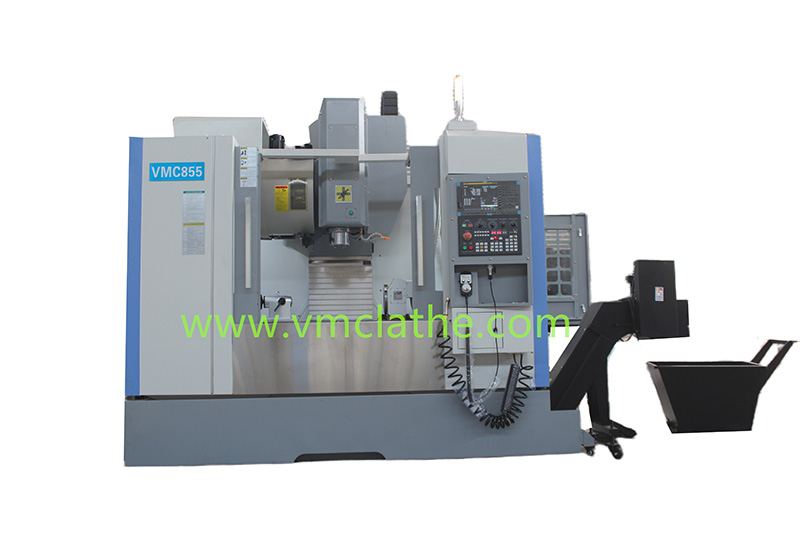
Why CNC Machining Centers Are Essential for Modern Mold Making
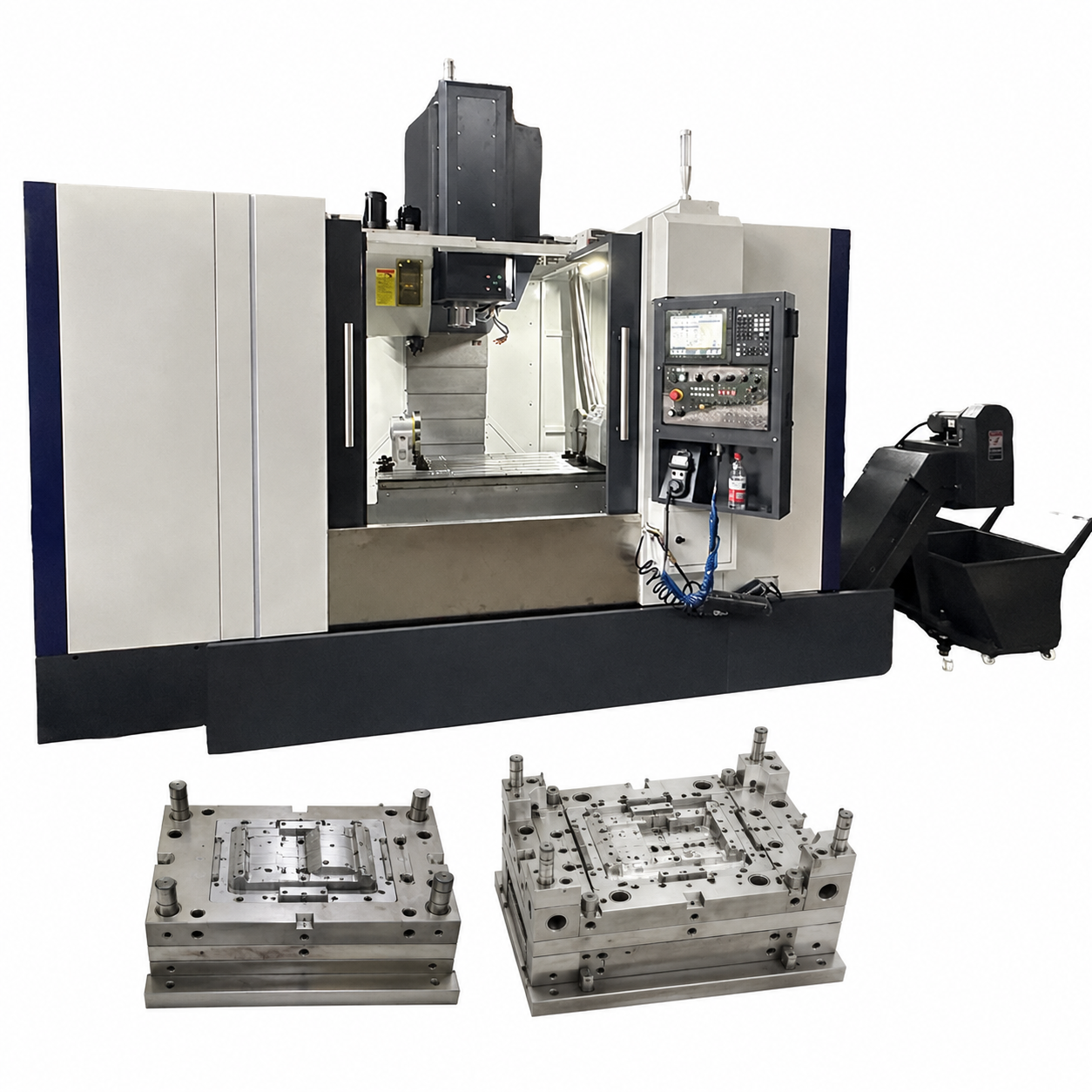
In today’s highly competitive manufacturing industry, precision, efficiency, and consistency are critical for mold production. Whether producing plastic injection molds, die-casting molds, stamping dies, or automotive tooling, manufacturers rely heavily on advanced machining equipment to achieve superior quality and shorter lead times.
Among all machine tools used in mold production, the CNC Machining Center has become one of the most important pieces of equipment. It provides the accuracy, flexibility, and productivity required to manufacture complex mold components with tight tolerances.
This article explores the role of CNC machining centers in mold manufacturing and explains why they are indispensable for modern mold makers.
What Is a CNC Machining Center?
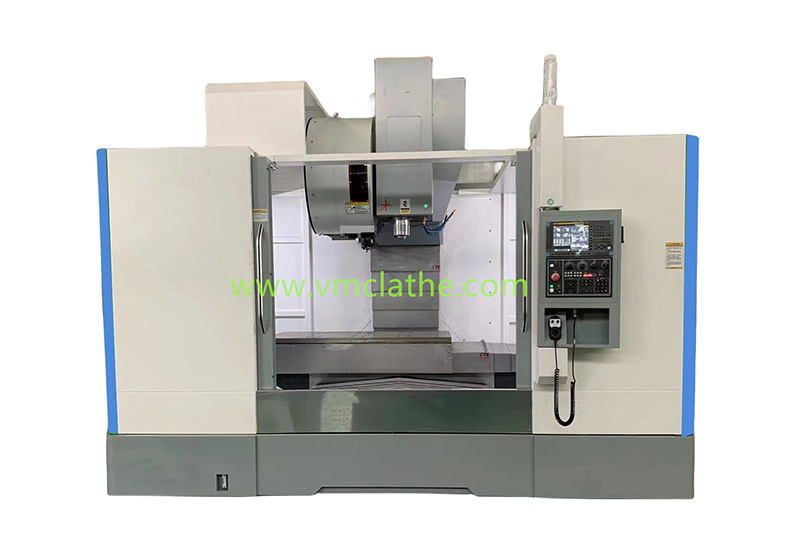
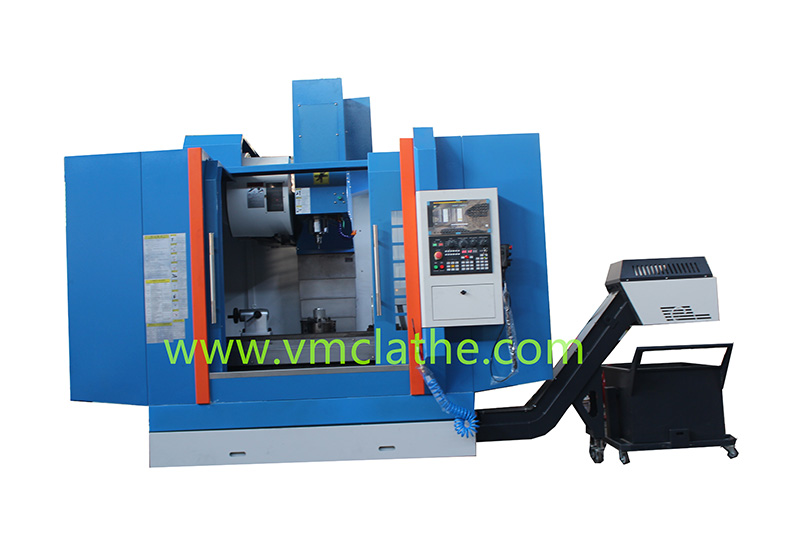
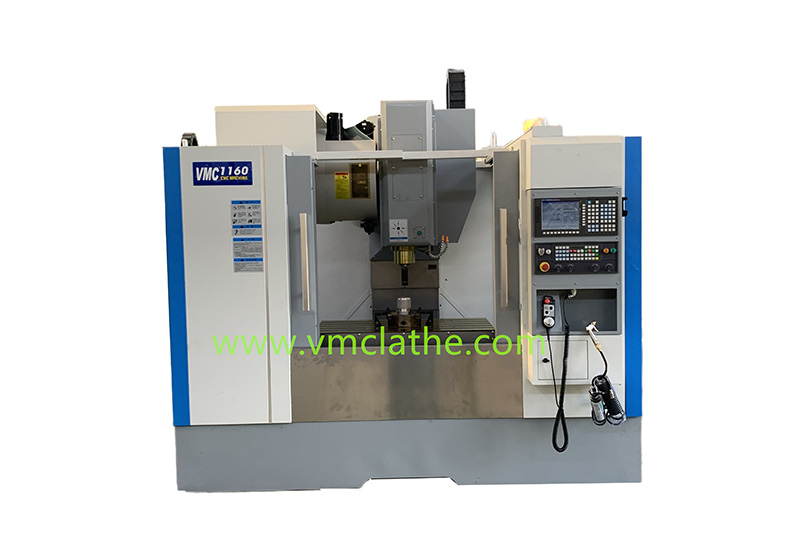
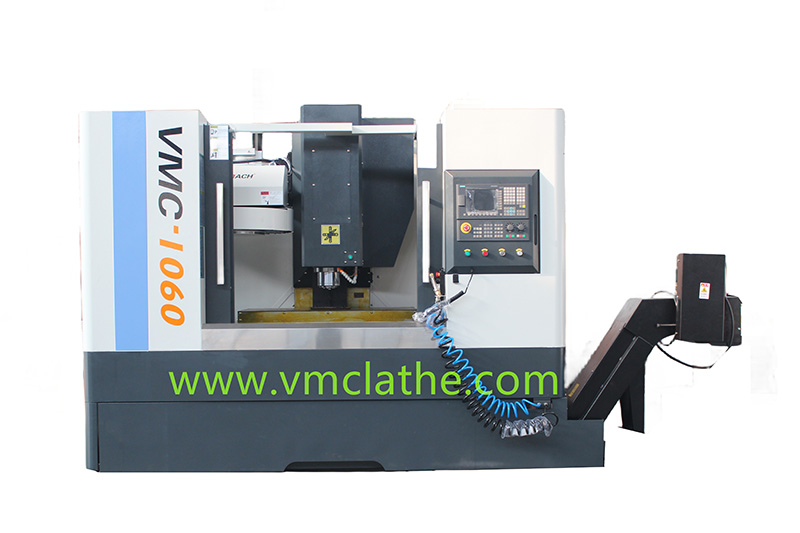
A CNC Machining Center is a computer-controlled milling machine equipped with an automatic tool changer (ATC), multiple machining capabilities, and high-precision motion control systems.
Compared with conventional milling machines, a CNC machining center can perform multiple operations in a single setup, including:
- Milling
- Drilling
- Boring
- Tapping
- Contouring
- Surface finishing
This significantly improves machining accuracy and production efficiency.
Why Mold Manufacturers Choose CNC Machining Centers
1. High Precision for Complex Mold Components
Mold components often contain intricate geometries, deep cavities, curved surfaces, and precise dimensional requirements.
A high-quality CNC machining center can achieve:
- Tight dimensional tolerances
- Excellent surface finish
- Accurate contour machining
- Consistent repeatability
These capabilities are crucial for ensuring proper mold assembly and producing high-quality molded parts.
2. Faster Production Cycles
Traditional machining methods require multiple setups and frequent manual intervention.
A CNC machining center reduces production time by:
- Automatic tool changing
- High-speed cutting
- Multi-operation machining
- Reduced setup requirements
As a result, mold manufacturers can shorten lead times and increase overall productivity.
3. Superior Surface Quality
Many mold cavities require smooth surfaces before polishing or EDM operations.
Modern CNC machining centers offer:
- High spindle speeds
- Precision feed control
- Stable machine structures
This enables manufacturers to achieve better surface finishes and reduce subsequent polishing work.
4. Capability to Machine Hardened Materials
Mold materials such as:
- P20 Steel
- H13 Tool Steel
- S136 Stainless Mold Steel
- NAK80 Mold Steel
require rigid machine structures and stable cutting performance.
A robust CNC machining center can effectively machine these materials while maintaining accuracy and tool life.
Applications of CNC Machining Centers in Mold Manufacturing
Plastic Injection Molds
CNC machining centers are widely used for:
- Mold cavity machining
- Core machining
- Cooling channel drilling
- Mold base processing
High precision ensures the production of high-quality plastic components with minimal defects.
Die Casting Molds
Die casting molds often require machining of complex cavities and heat-resistant materials.
A CNC machining center helps manufacturers achieve:
- Precise cavity geometry
- High dimensional accuracy
- Improved mold lifespan
Stamping Dies
For stamping die production, CNC machining centers are used to machine:
- Punches
- Die blocks
- Guide components
- Precision fixtures
This ensures consistent performance during high-volume production.
Automotive Mold Manufacturing
Automotive molds require extremely high precision and repeatability.
CNC machining centers enable manufacturers to produce:
- Bumper molds
- Interior component molds
- Lighting molds
- Structural component tooling
with reliable quality and shorter delivery times.
Key Features to Look for in a CNC Machining Center for Mold Making
When selecting a CNC machining center for mold manufacturing, buyers should consider:
Machine Rigidity
A rigid machine structure minimizes vibration and improves machining accuracy.
High-Speed Spindle
A spindle speed of 8,000–15,000 RPM is commonly used for mold applications, depending on material requirements.
Precision Ball Screws and Linear Guides
High-quality motion components ensure smooth movement and accurate positioning.
Automatic Tool Changer (ATC)
An ATC increases productivity by reducing manual tool replacement.
Advanced CNC Control System
Modern control systems improve contour accuracy, machining efficiency, and ease of programming.
Benefits of Using CNC Machining Centers for Mold Production
Manufacturers can gain several advantages by investing in a CNC machining center:
- Higher machining accuracy
- Faster production speed
- Reduced labor costs
- Better surface quality
- Increased productivity
- Improved consistency
- Shorter delivery times
- Greater competitiveness
These benefits make CNC machining centers one of the most valuable investments for mold-making companies.
Conclusion
As mold designs become increasingly complex and quality requirements continue to rise, the CNC Machining Center plays a vital role in modern mold manufacturing.
From plastic injection molds and die-casting molds to stamping dies and automotive tooling, CNC machining centers provide the precision, efficiency, and reliability needed for successful production.
For mold manufacturers looking to improve productivity and maintain a competitive edge, investing in a high-performance CNC machining center is a strategic decision that delivers long-term value and superior machining results.