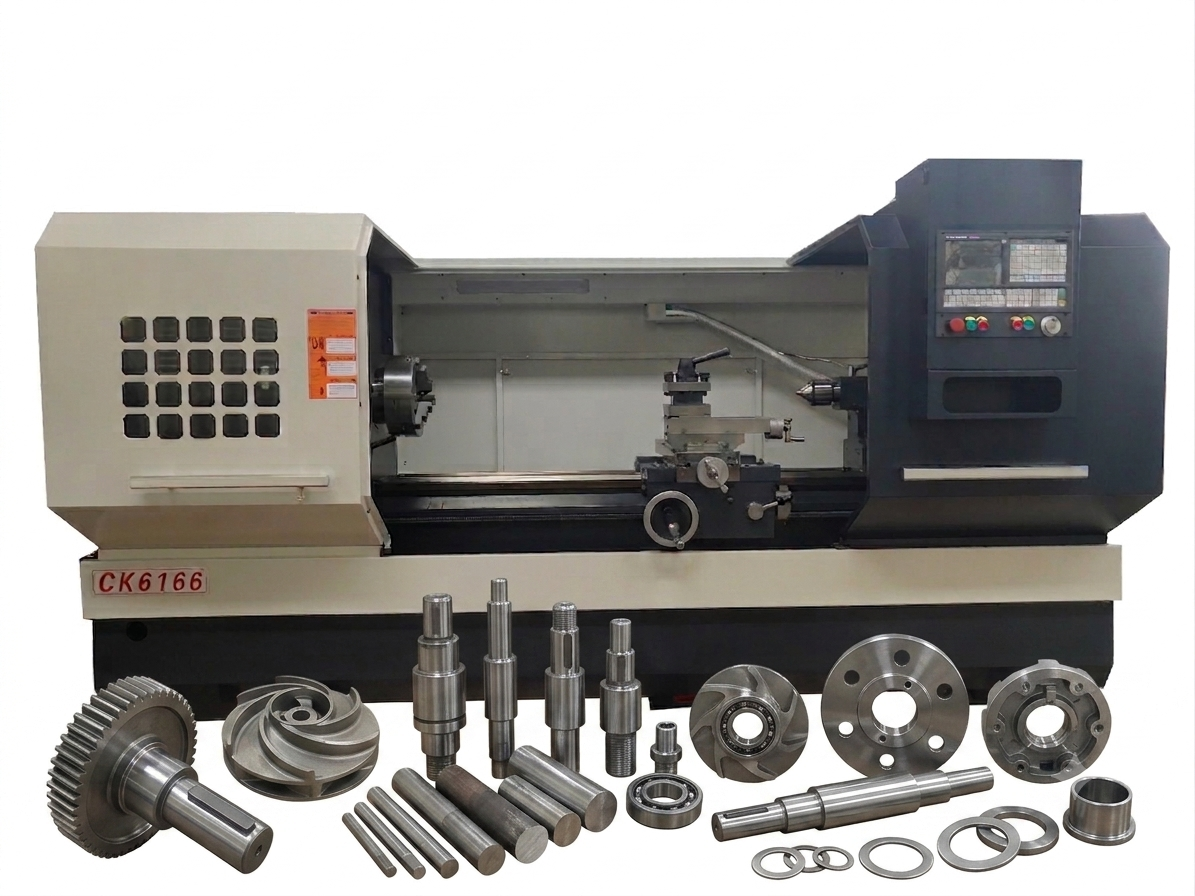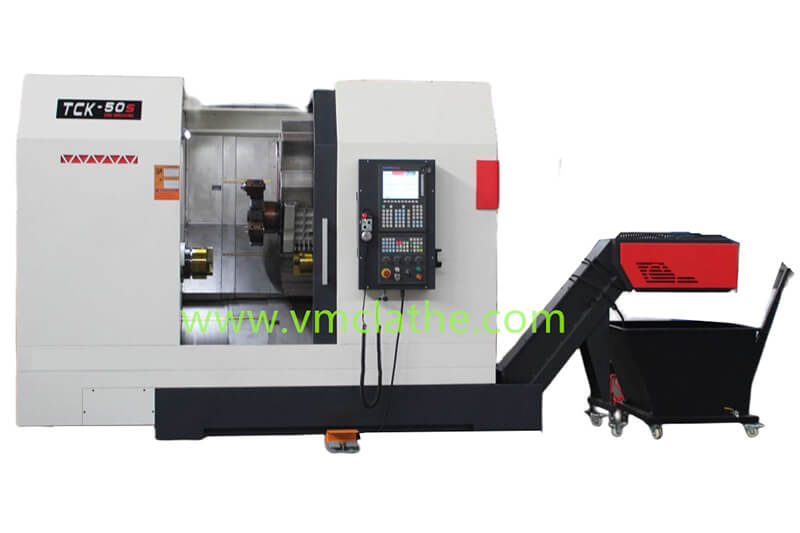
In today’s highly competitive metal hardware industry, manufacturers are constantly looking for ways to improve productivity, machining accuracy, and profitability. Whether producing shafts, fittings, fasteners, valves, connectors, or custom metal components, selecting the right machine tool plays a critical role in achieving these goals.
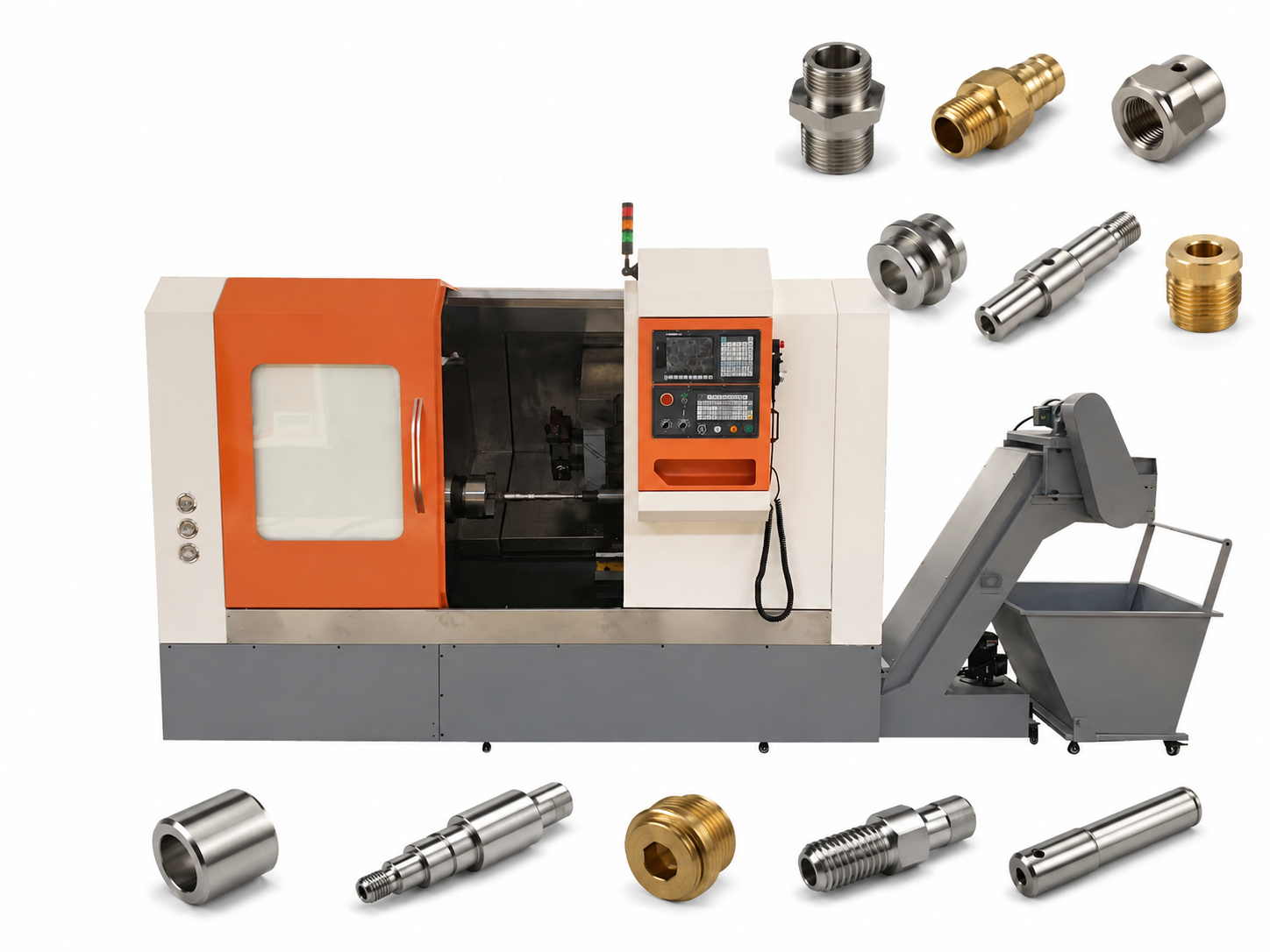
Among various turning solutions, the Slant Bed CNC Lathe has become one of the most popular choices for modern hardware manufacturers. Thanks to its rigid structure, excellent chip removal capability, and high-speed machining performance, a slant bed CNC lathe can significantly increase production efficiency while maintaining superior part quality.
This article explores why a slant bed CNC lathe is an ideal solution for metal hardware processing and how it helps manufacturers stay competitive.
What Is a Slant Bed CNC Lathe?
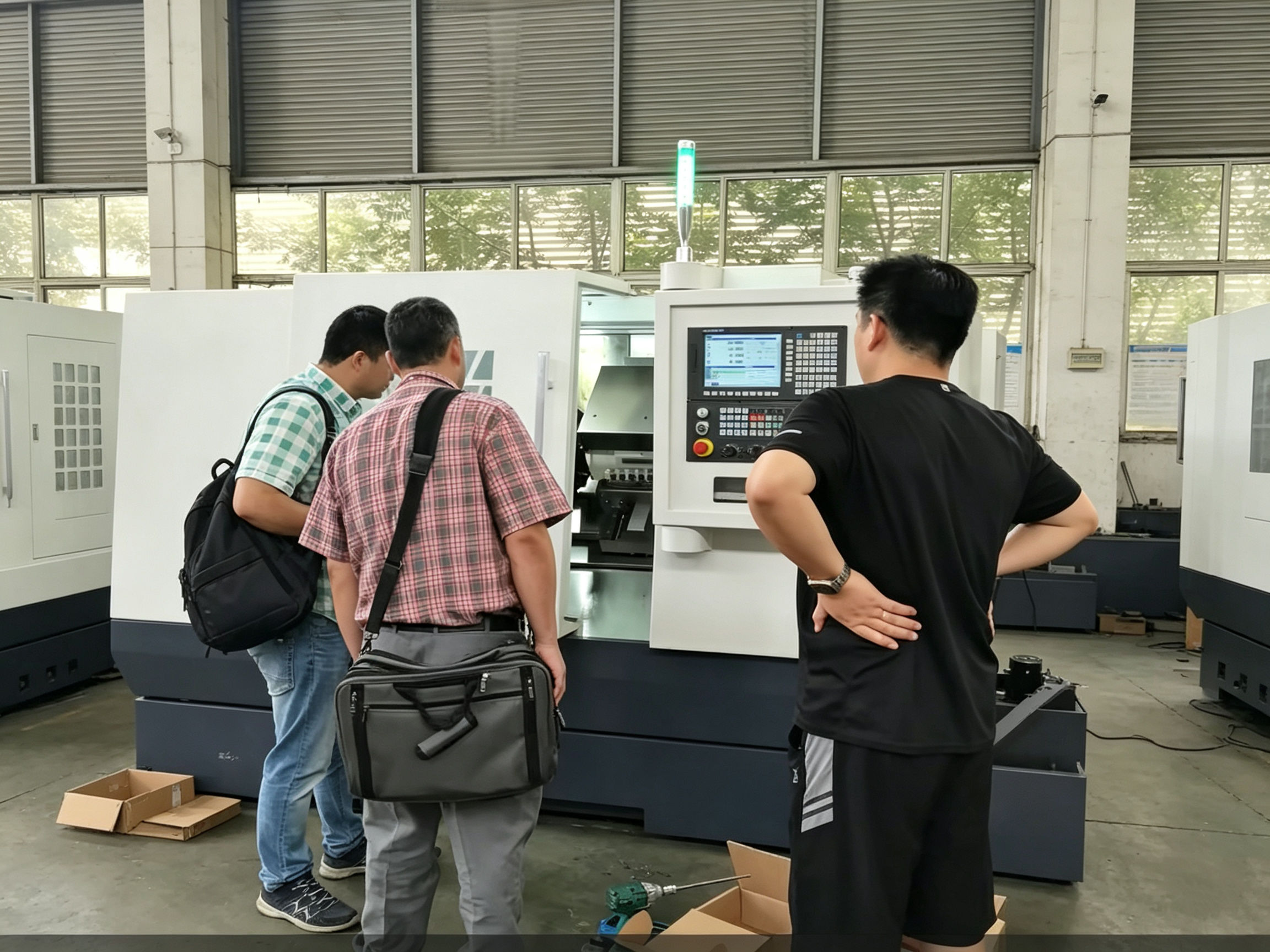
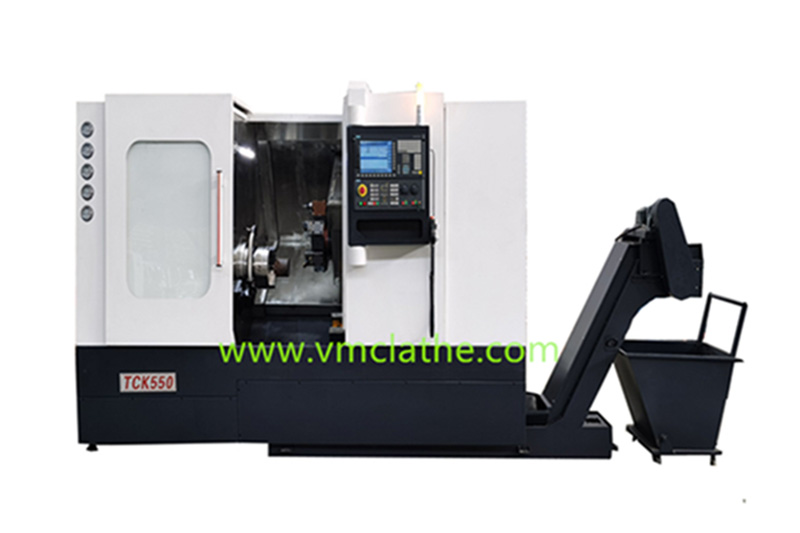
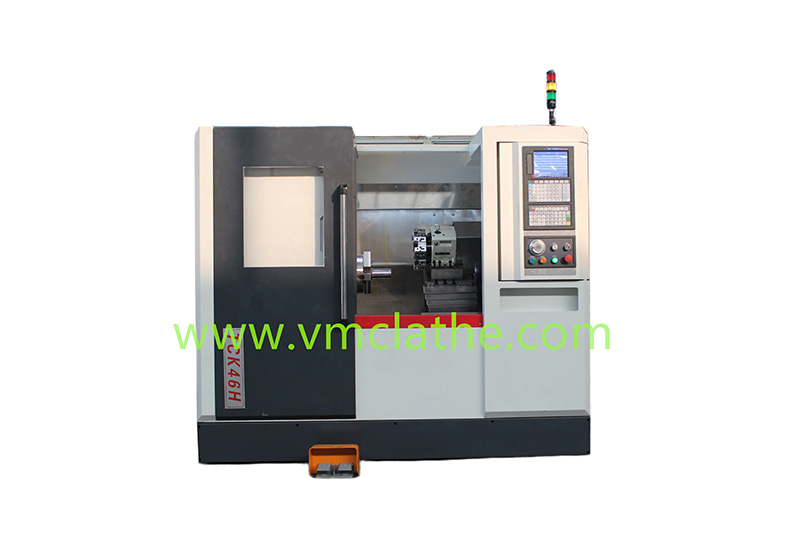
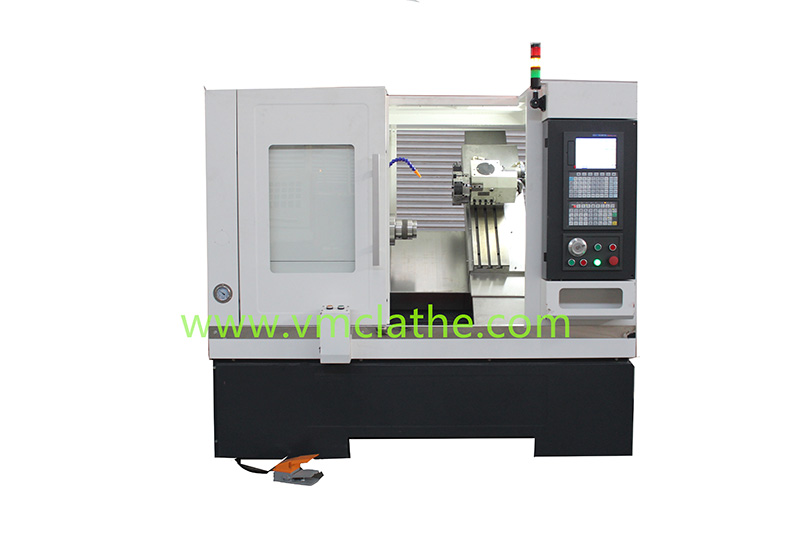
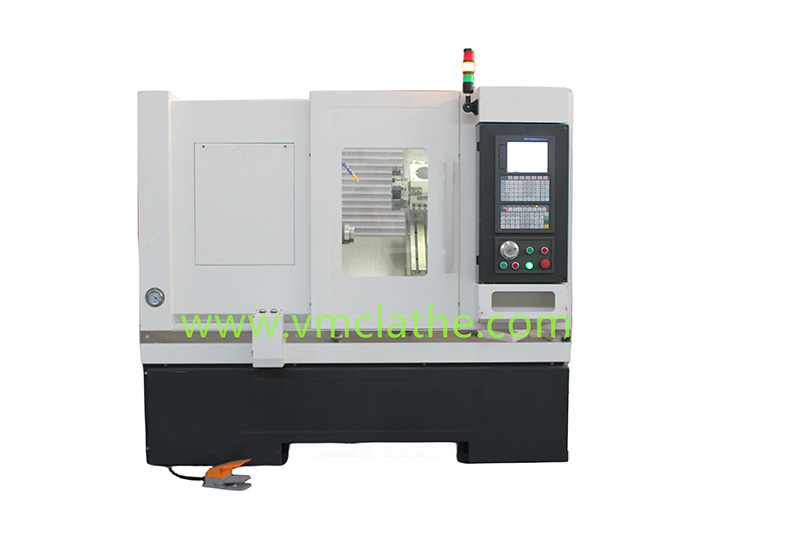
A Slant Bed CNC Lathe is a computer-controlled turning machine designed with an inclined machine bed, typically positioned at a 30° to 45° angle. Unlike conventional flat bed lathes, the slanted structure provides better rigidity, improved chip evacuation, and easier access for tool changes.
The machine is widely used for machining:
- Metal shafts
- Bushings
- Hydraulic fittings
- Pipe connectors
- Automotive hardware components
- Stainless steel parts
- Brass and aluminum fittings
- Industrial fasteners
Its versatility makes it a preferred choice in hardware manufacturing workshops worldwide.
1. Higher Rigidity Ensures Stable Cutting
One of the biggest advantages of a slant bed CNC lathe is its superior structural rigidity.
During metal cutting operations, especially when machining steel or stainless steel components, significant cutting forces are generated. The inclined bed design allows these forces to be distributed more effectively throughout the machine structure.
Benefits include:
- Reduced vibration
- Better surface finish
- Improved dimensional accuracy
- Longer tool life
For hardware manufacturers producing large quantities of precision parts, stable cutting performance directly translates into higher productivity and fewer rejected parts.
2. Faster Chip Removal Improves Production Efficiency
Chip management is a major challenge in metal hardware machining.
When chips accumulate around the cutting area, they can:
- Damage workpiece surfaces
- Increase tool wear
- Interrupt automatic production
- Cause machine downtime
The slanted bed design allows chips to fall away naturally by gravity, preventing chip accumulation around the cutting zone.
As a result:
- Production runs more smoothly
- Operators spend less time cleaning machines
- Automatic machining cycles remain uninterrupted
- Overall efficiency increases significantly
This advantage becomes particularly valuable when machining stainless steel and carbon steel hardware components that generate long continuous chips.
3. Excellent Accuracy for Precision Hardware Parts
Modern hardware products often require tight tolerances and consistent dimensions.
A slant bed CNC lathe offers:
- High positioning accuracy
- Excellent repeatability
- Stable thermal performance
- Reduced deformation during machining
This makes it ideal for manufacturing precision hardware such as:
- Hydraulic connectors
- Pneumatic fittings
- Bearing components
- Valve parts
- Precision threaded products
Consistent accuracy helps manufacturers meet customer requirements while reducing inspection and rework costs.
4. Supports High-Speed Production
In high-volume hardware manufacturing, cycle time directly affects profitability.
Most modern slant bed CNC lathes feature:
- Rapid traverse speeds
- Servo-driven axes
- Hydraulic chucks
- Automatic tool turrets
These features enable:
- Faster loading and unloading
- Shorter machining cycles
- Increased daily production output
For companies producing thousands of identical hardware parts, even a few seconds saved per cycle can generate substantial productivity gains over time.
5. Automation-Friendly Design
As labor costs continue to rise globally, automation is becoming increasingly important.
A slant bed CNC lathe can easily integrate with:
- Bar feeders
- Gantry loaders
- Robotic arms
- Automatic part collectors
This enables manufacturers to establish unattended or semi-automated production lines.
Benefits include:
- Reduced labor requirements
- Consistent production quality
- Higher machine utilization
- Lower manufacturing costs
For hardware factories seeking to expand production capacity without significantly increasing workforce size, automation-ready CNC lathes offer a major advantage.
6. Ideal for Various Hardware Materials
A slant bed CNC lathe can efficiently process a wide range of materials commonly used in hardware manufacturing, including:
- Carbon steel
- Alloy steel
- Stainless steel
- Brass
- Aluminum
- Copper
- Titanium alloys
Its strong cutting capability and rigid construction make it suitable for both light-duty and heavy-duty machining applications.
Typical Hardware Components Processed on a Slant Bed CNC Lathe
Common hardware products manufactured using slant bed CNC lathes include:
- Pipe fittings
- Hydraulic adapters
- Hose connectors
- Automotive bushings
- Fasteners
- Threaded shafts
- Bearing sleeves
- Precision pins
- Valve bodies
- Industrial couplings
These components are widely used across industries such as automotive, construction, machinery, energy, and industrial equipment.
Conclusion
For manufacturers seeking higher productivity, superior machining accuracy, and lower production costs, a Slant Bed CNC Lathe is an excellent investment.
Its rigid machine structure, efficient chip removal, high-speed machining capability, and automation compatibility make it particularly suitable for modern metal hardware manufacturing.
As market competition continues to intensify, companies that adopt advanced machining solutions such as slant bed CNC lathes can achieve greater efficiency, better product quality, and stronger long-term competitiveness.
If your business specializes in hardware component production, upgrading to a high-performance slant bed CNC lathe could be a strategic step toward increasing profitability and expanding manufacturing capabilities.